When you take possession of a house, the first security step most locksmiths recommend is to rekey every exterior lock so any keys still in circulation stop working. Rekeying resets the pins inside your existing hardware, while replacement swaps the whole lock body. The right choice depends on the age, condition, and grade of what the previous owner left behind.
Closing on a house in Tucson comes with a long list of moving-day tasks, and the front-door lock rarely makes the top of it. It should. The keys handed to you at closing are almost never the only keys that exist. Contractors, house cleaners, dog walkers, former tenants, real estate agents, and the previous owner’s relatives may all have copies floating around in drawers and on keyrings. You have no way to account for every one of them, which is exactly why changing the locks matters before you spend your first night in the place.
The good news is that securing a new home does not usually mean buying and installing brand-new hardware on every door. In many cases a locksmith can simply rekey the locks you already own, which resets them to a new key and voids every old one for a fraction of the cost of replacement. In other cases, worn or low-grade hardware is worth swapping out entirely. Knowing which path fits your situation saves both money and second-guessing.
This guide walks through the difference between rekeying and replacement, who might still hold a key to your new house, how to decide between the two options, and roughly what the work runs. If you are settling into a home anywhere around Tucson, a licensed local locksmith can handle the whole process on-site the same day you ask.
Discount Locksmith of Tucson is a mobile, insured shop that focuses on residential work like this every day. Our background-checked technicians bring the tools and blank keys to your driveway, so there is no reason to haul a lock down to a store or wait a week for an appointment. Below is what you need to know before you decide.
Why Changing the Locks Comes First After a Move
A key is only as secure as the number of copies in the world, and when you buy or rent a home you inherit an unknown count. Even an honest seller who hands over “all the keys” cannot vouch for the spare that a neighbor kept for emergencies, the copy a college-age kid never returned, or the key a landscaping crew was given years ago. None of these people are necessarily a threat, but security is about controlling access, not trusting strangers to have forgotten about a key.
There is also a practical insurance angle. If a break-in ever happens through a door that shows no sign of forced entry, some policies scrutinize whether you took reasonable steps to secure the property. Rekeying on move-in is a documented, low-cost step that removes that question entirely. For most Tucson homeowners, having a locksmith reset the locks is the single most useful security task of the whole move, and it takes far less time than unpacking the kitchen.
Rekey vs. Replacement: What Is the Difference?
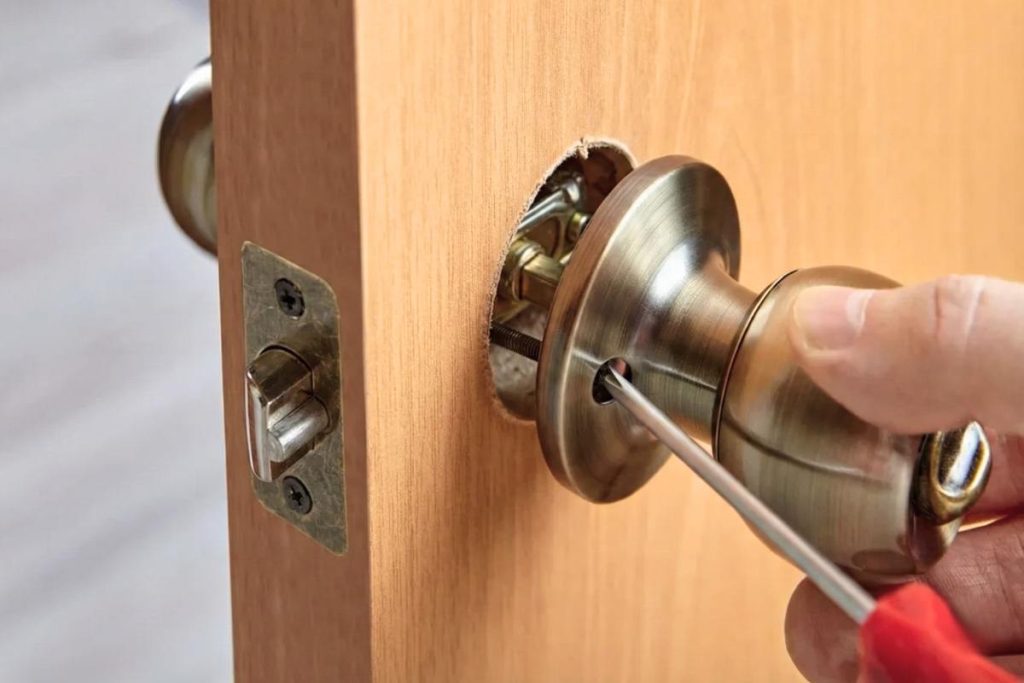
These two terms get used interchangeably, but they are different jobs. Rekeying keeps your existing lock in the door and changes the internal pin configuration so a new key works and the old key does not. The lock body, the finish, and the deadbolt all stay put. Replacement removes the entire lock and installs a new one, which is the route to take when the hardware itself is worn out, damaged, or too low-grade to trust.
Rekeying is the more common recommendation on move-in because it is less expensive, faster to complete, and it lets you keep hardware that still looks and works well. Replacement makes sense when you want a higher security grade, a different style, or a smart lock. If you want the mechanics in detail, our walkthrough on how the rekeying process actually works covers what happens inside the cylinder. Use the quick diagnosis below to see which direction likely fits your doors.
| Your Situation | Rekey or Replace | Why |
|---|---|---|
| Locks work fine, you just want new keys | Rekey | Voids old keys at the lowest cost while keeping good hardware |
| Front, back, and side doors use different keys | Rekey to match | A locksmith can set every lock to one new key |
| Deadbolt is loose, sticky, or corroded | Replace | Worn hardware is not worth rekeying |
| You want a keypad or smart lock | Replace | New function requires new hardware |
| Locks are builder-grade or unbranded | Consider replace | A higher grade improves resistance to picking and drilling |
| Key sticks or the lock is hard to turn | Inspect first | Could need cleaning, rekey, or replacement |
Who Might Still Have a Key to Your New House
It helps to picture the actual people who could be holding a working key, because the list is longer than most new owners expect. None of these are accusations, they are simply reasons the old keys are an unknown quantity you cannot audit:
- The previous owner and every member of their household, including adult children who moved out
- Neighbors, friends, or family who kept a spare for emergencies or pet care
- Cleaning services, house sitters, dog walkers, and lawn crews
- Contractors, painters, and repair technicians who were given access during a project
- Former tenants if the home was ever a rental, plus their guests
- Real estate agents and anyone who had lockbox access during the sale
Rekeying erases all of that in a single visit. Once a technician resets the pins, every key on that list becomes a useless piece of brass, and you hold the only working copies. If you need extras for family members afterward, a locksmith can cut fresh keys on the spot so everyone is covered from day one.
When to Rekey and When to Replace
Lean toward rekeying when your locks are in solid shape and you are happy with how they look and feel. If the deadbolt throws smoothly, the finish is intact, and the brand is one you recognize, there is little reason to spend more. A rekey gives you the same security benefit as new keys without the cost of new hardware, and a locksmith can even set several mismatched locks to a single key so you stop juggling a crowded keyring.
Lean toward replacement when the hardware is failing or falling short. Sticky cylinders, rusted faces, wobbly handles, and thin builder-grade locks are all signs it is time for something better. This is also the moment to think about an upgrade, since the technician is already at your door. Many Tucson homeowners take the opportunity to move up to a stronger deadbolt or add a keypad. If you are weighing options, our overview of high-security and smart lock choices lays out what modern hardware adds, and a technician can install new deadbolts and knobs during the same appointment.
Tucson’s dry heat and dust are worth a mention here. Grit works its way into cylinders over the years, and afternoon sun bakes exterior hardware until low-grade finishes chalk and fade. If a home has sat with the same locks for a decade or more, expect a technician to recommend at least cleaning or lubrication, and possibly replacement, on the sun-facing doors. Regular upkeep on aging hardware keeps small problems from turning into a lockout later.
What Rekeying or Replacing Costs in Tucson
Pricing depends on how many doors you have, the type and grade of hardware, and whether you are rekeying or replacing. As a general rule, rekeying an existing lock costs noticeably less than buying and installing a new one, which is why it is the go-to move-in step. A house with three or four exterior doors set to a single new key is a routine, same-visit job. Replacement runs higher because you are paying for the hardware itself on top of the labor, and premium or smart locks sit at the upper end.
Rather than guessing, ask for upfront pricing before any work starts. A local shop should be able to give you a clear figure over the phone once you describe your doors, with no surprise charges added at the end. For a fuller breakdown of how the two options compare on price, our guide comparing rekeying cost against full replacement is a useful starting point, and you can always request a quote for your exact address. When you are ready, our rekeying and house lockout service covers the move-in scenario directly, and you can browse the rest of our residential work if you want everything handled at once.
Frequently Asked Questions
Should I rekey or fully replace the locks when I move in?
How soon after closing should I change the locks?
Can all my doors be set to a single key?
Does rekeying make my locks any weaker?
Do I need to remove the locks and bring them somewhere?
What if I also want extra keys for family members?
Getting Into Your New Home Securely
Changing the locks is the one security task worth handling before the boxes are even unpacked. Whether a rekey covers you or a couple of doors call for fresh hardware, the work is routine, the cost is reasonable, and it puts control of who can enter your home squarely back in your hands. A licensed, insured local shop can look at your doors, tell you honestly which option fits, and finish the job the same day.
Discount Locksmith of Tucson is a mobile team that handles rekeys, replacements, and new keys on-site, every day from 6:00 AM to 9:30 PM. We serve Tucson along with Oro Valley, Marana, Sahuarita, and the Catalina Foothills. Learn a little more about the people behind the van, see the full list of what we handle, or read up on the locksmith work we do across Tucson.
Ready to reset the locks on your new place? Call (520) 994-8773 for upfront pricing, send us a message to schedule, or find Discount Locksmith of Tucson on the map. You can also see the Discount Locksmith of Tucson home page for the areas we cover and how same-day service works.