Deciding on door lock replacement Tucson homeowners can trust comes down to one question: repair, rekey, or replace? A lock that is worn, damaged, or outdated may only need a reset, while a failing deadbolt calls for new hardware. This guide walks you through the signs, the grades, and the smart call for your home.
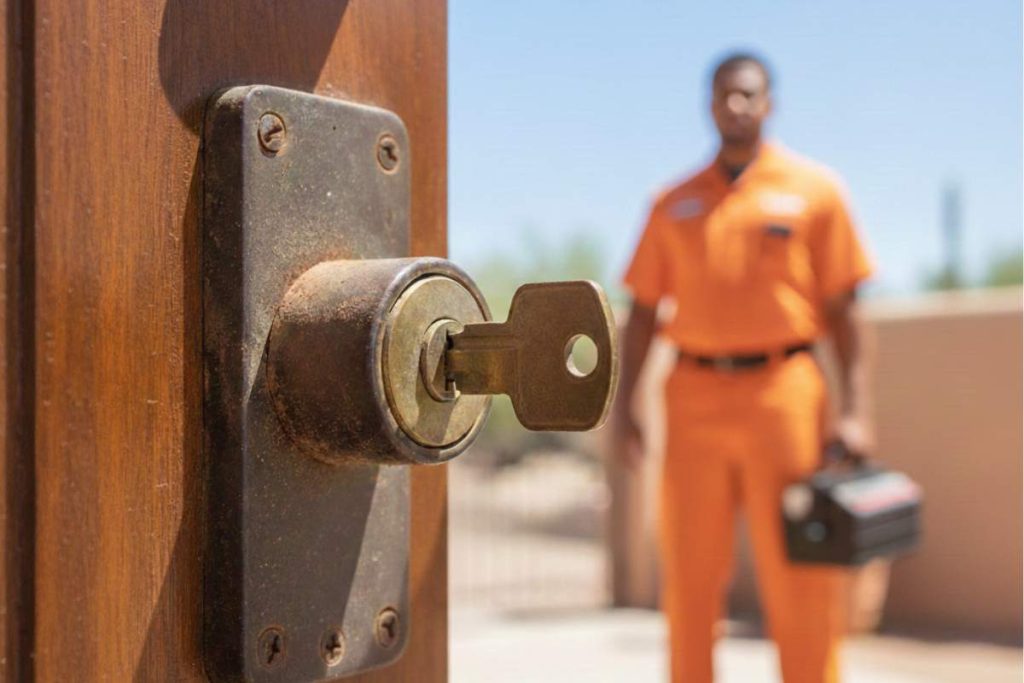
Your front door lock takes more abuse than almost anything else in your house. It gets turned thousands of times a year, sits in direct sun, and here in Tucson it fights heat, blowing dust, and the humidity swings of monsoon season. Over time that wear adds up, and a lock that once felt solid starts to stick, wiggle, or turn rough.
The tricky part is knowing when a lock is simply annoying and when it has become a real security weakness. Not every problem means you need to buy new hardware. Sometimes a rekey or a minor repair does the job for a fraction of the cost. Other times, replacing the lock is the only move that actually protects your home.
Discount Locksmith of Tucson helps homeowners make that call every day, on-site and across the metro. Our technicians are licensed, insured, and background-checked, we quote pricing before we start, and we keep hours from 6:00 AM to 9:30 PM so you are never stuck waiting. You can learn more about our local team or see the neighborhoods we cover on our Tucson service area page.
Below we break down when to replace versus repair or rekey, the wear you should watch for in the desert climate, how ANSI grades work, the main lock types, and what a professional replacement actually involves. When you are ready for hands-on help, our door lock, deadbolt, and knob installation service covers the whole process.
Repair, Rekey, or Replace: How to Tell the Difference
These three options solve very different problems, and choosing the wrong one wastes money or leaves you exposed. Here is the simple logic our technicians use.
Repair makes sense when the lock body is healthy but one part is acting up, such as a loose set screw, a dry cylinder, or a misaligned latch. A little adjustment or cleaning often restores smooth operation. Our guide on how to lubricate a lock covers a common fix that solves sticky mechanisms.
Rekey is the answer when the lock works fine but the wrong people may have a key. Rekeying changes the internal pins so old keys stop working, without replacing the hardware. It is the budget-friendly choice after moving into a new home, losing a key, or ending a roommate or contractor relationship. To weigh the numbers, see our breakdown of rekeying cost and rekey versus replace.
Replace is the right move when the lock is worn out, damaged, or simply not secure enough. If the deadbolt no longer throws fully, the cylinder is corroded, or the lock is a builder-grade unit that a burglar could defeat in seconds, new hardware is the only fix that restores real protection. When a lock is broken outright, our broken lock replacement team handles it fast.
Signs Your Tucson Door Lock Is Wearing Out
Locks rarely fail all at once. They warn you first. In our climate, the desert accelerates a few specific problems, so watch for these signals:
- Sticking or grinding: the key turns rough or you have to jiggle it. Dust and grit work into the cylinder and wear the pins.
- A loose or wobbly lock: the whole assembly shifts when you turn the key, a sign the internal parts are worn or the screws have backed out from heat cycling.
- A deadbolt that will not throw fully: if the bolt does not extend all the way, the door is not truly locked, and expansion from heat can pull the strike out of alignment.
- Corrosion or discoloration: monsoon humidity and sprinkler overspray leave rust or a chalky film that seizes moving parts.
- A key that sticks or breaks: a worn cylinder grips the key. If a key ever snaps off, see our guide on a broken key in a lock before you force anything.
- Visible damage: pry marks, a bent bolt, or a cracked housing after an attempted break-in.
Any one of these on an exterior door is worth a closer look. Two or more usually means replacement is the safer call. For homes that want to stay ahead of wear, our lock upgrade and maintenance service catches small problems before they strand you outside.
Understanding ANSI Grades and Lock Quality
Not all locks are built the same, and the label on the box tells you more than the price does. Locks carry an ANSI/BHMA grade that rates durability and security through cycle and strength testing:
- Grade 1 is the highest residential rating, built to survive the most turns and the hardest strikes. It is the standard we recommend for front and back doors.
- Grade 2 offers solid protection for interior and lower-traffic exterior doors.
- Grade 3 is basic builder-grade hardware, fine for a closet but too easy to defeat on an entry door.
Many homes are handed over with Grade 3 locks the builder installed to save money. Upgrading an exterior door to a Grade 1 deadbolt is one of the most cost-effective security improvements you can make. To go a step further, our high-security deadbolt guide explains the added protection of drill- and pick-resistant hardware, and our security door locks service installs it.
Choosing the Right Lock Type
Once you decide to replace, the next question is what to install. Each type has a place, and the best door usually pairs a strong deadbolt with a matching handle.
| Lock Type | Best For | What to Know |
|---|---|---|
| Deadbolt | Front, back, and side entry doors | Your primary security; choose Grade 1 and a solid strike |
| Knob | Interior doors and secondary latching | Convenient but not a security lock on its own |
| Lever handle | Easy-grip access, accessibility needs | Great for reach; pair with a deadbolt on entries |
| Smart lock | Keyless entry and remote control | Codes and app access; keep the battery fresh |
Smart locks are worth a closer look if you juggle keys, guests, or service visits. They let you set codes, grant temporary access, and skip hiding a spare under the mat. Our high-security smart locks service pairs that convenience with strong physical hardware, and our roundup of the best smart locks for 2026 helps you compare models. If you would rather stick with keys but want fewer of them, a single- versus double-cylinder deadbolt comparison is a good next read.
What a Professional Replacement Looks Like
A proper lock replacement is more than screwing on new hardware. When our technician arrives on-site, the process usually runs like this:
- Inspect the door, frame, and existing bore to confirm the new lock fits and the door has not warped in the heat.
- Recommend a grade and type that matches how the door is used and the security you want.
- Remove the old hardware and check the strike, latch alignment, and frame for damage.
- Install the new lock, adjust the strike so the bolt throws fully, and test smooth operation.
- Key the new locks alike if you want, so one key runs your whole home.
That last step is where a locksmith earns their keep. If you are replacing several locks, having them keyed to a single key adds real convenience, and it pairs naturally with our house rekeying and lockout service. You can browse the full menu of home options on our residential locksmith page, or see everything we do across our services overview.
Frequently Asked Questions
How do I know if I should replace or just rekey my lock?
Rekey when the lock works well and you only need old keys to stop opening it, such as after moving in. Replace when the lock is worn, corroded, damaged, or too low a grade to be secure. If you are unsure, a technician can inspect it and tell you which saves you money.
Does Tucson’s climate really affect my locks?
Yes. Constant heat, blowing dust, and monsoon humidity work grit into the cylinder, dry out lubrication, and expand doors so bolts fall out of alignment. Those conditions wear exterior locks faster than a milder climate would, so regular cleaning and the occasional upgrade pay off.
What ANSI grade should my front door lock be?
Aim for a Grade 1 deadbolt on exterior entry doors. It is the highest residential rating for durability and strike resistance. Grade 2 works for lower-traffic doors, while Grade 3 builder hardware is best kept to interior use only.
Can you replace a lock with a smart lock?
We can. We install smart deadbolts and keypad locks, set up your codes, and make sure the physical hardware is still strong. That gives you keyless entry, temporary guest access, and remote control without giving up real security.
How long does a door lock replacement take?
A single standard door lock usually takes well under an hour once the technician confirms the fit. Multiple doors or hardware that requires new boring or strike work takes longer. We give you a time estimate along with upfront pricing before we start.
Is it worth keeping all my locks on one key?
For most homes, yes. Keying every exterior lock alike means one key opens every door, which is far more convenient and easy to manage. We can do this during a replacement or as a standalone rekey.
Making the Right Call
The best lock decision protects your home without overspending. If the hardware is worn, corroded, or too weak to trust, replacement is the move. If it still works and you only need to control who holds a key, a rekey does the job. When the picture is not clear, an on-site inspection settles it in minutes.
Call Discount Locksmith of Tucson at (520) 994-8773 and a licensed, insured technician will help you weigh repair, rekey, or replacement with pricing you see up front. You can also reach us through our contact page or start with our home page. Find us on the map here: Discount Locksmith of Tucson on Google Maps, and see everywhere we serve on our Tucson locksmith page.