The strongest door security upgrade combines a Grade 1 or Grade 2 ANSI deadbolt with a reinforced strike plate anchored by three-inch screws that reach the wall framing. Hardware alone stops picking and drilling, but the frame is what resists a kick. Pairing a quality lock with a solid strike is what actually keeps a Tucson door shut.
Most break-ins do not involve lock picking or any clever technique. They come through a door, and the door gives way because the lock, the frame, or the screws holding everything together were never built to take a hard shove. A burglar rarely fights a deadbolt itself. They split the jamb, pop a flimsy strike plate off the frame, or slip a short latch that a homeowner assumed was a real lock. Understanding where doors actually fail is what separates a security upgrade that works from one that just looks reassuring.
The encouraging part is that a genuinely secure entry door is not expensive or complicated. It is a stack of small, correct choices: the right grade of deadbolt, a strike plate that bites into the framing behind the jamb, long screws instead of the stubby ones that ship in the box, and a cylinder that resists common attacks. Add a smart lock or a keypad if you want convenience on top, but the mechanical foundation is what stops a forced entry.
This guide breaks down the upgrades that matter, in the order they matter, and points out which ones are worth prioritizing first. If you are hardening a home anywhere around Tucson, a licensed local locksmith can assess your doors and install the right combination on-site. Let us start with why the frame matters as much as the lock.
Discount Locksmith of Tucson is an insured mobile shop, and residential security work like this is a daily job for our background-checked technicians. We bring the hardware and tools to your driveway and finish the work at your door, so nothing gets left half-done. Here is what to focus on.
Start With the Deadbolt Grade
Not all deadbolts are equal, and the difference is measured by ANSI/BHMA grade. Grade 1 is the strongest residential rating, built to withstand the most force and the most cycles. Grade 2 is a solid middle tier that suits most homes. Grade 3 is the minimum standard and is often what comes pre-installed on builder-grade doors, which is exactly why so many front doors are weaker than their owners assume. Upgrading from a Grade 3 to a Grade 1 or 2 deadbolt is one of the most meaningful single changes you can make.
Beyond the grade, look at the throw of the bolt. A deadbolt should extend at least one inch into the frame when locked, which keeps it engaged even if the door flexes under pressure. A short throw, or a spring latch masquerading as a lock, offers almost no resistance to a shoulder or a boot. If you want the reasoning behind moving up a tier, our rundown of what a high-security deadbolt adds covers the mechanical details worth knowing before you buy.
Reinforce the Strike Plate and Frame
Here is the upgrade almost everyone overlooks, and it may be the most important one on the list. The strike plate is the metal piece on the door frame that the bolt slides into. On a standard installation, that plate is held by two short screws that bite into nothing more than the thin jamb trim. When someone kicks the door, those screws tear straight out and the whole thing gives way, no matter how good the lock is.
The fix costs a few dollars and a few minutes: swap the short screws for three-inch screws that pass through the jamb and anchor into the wall stud behind it, and install a heavier reinforced strike plate with multiple screw holes. Now a kick has to overcome the framing of the house instead of a strip of trim. Pairing a reinforced strike with a quality deadbolt is the single combination that defeats the most common forced-entry method, and it is the first thing a technician will check when you request a security door lock assessment.
Upgrades That Stop the Most Common Attacks
Once the deadbolt and strike are handled, a handful of additional upgrades close the remaining gaps. Each targets a specific weakness, and you can prioritize based on your door and your budget:
- High-security cylinders with anti-pick and anti-drill pins resist manipulation and the drill attacks that defeat cheaper locks
- Bump-resistant hardware guards against lock bumping, a quiet technique that opens standard pin-tumbler locks with a special key
- Reinforced strike plates on the latch as well as the deadbolt so the handle set is not the weak point
- A door reinforcement plate or wrap around the lock area, which stops the door edge from splitting
- Solid-core or metal doors in place of hollow doors that can be punched through
- A wide-angle viewer or camera so you can identify who is at the door before opening it
Lock bumping deserves special attention because it leaves no visible damage and works on a surprising number of standard locks. If that concern is new to you, our explainer on protecting against lock bumping shows why a bump-resistant cylinder is worth the modest extra cost.
Where Smart Locks and Keypads Fit
Smart locks and keypads are convenience upgrades first and security upgrades second, and it is worth being honest about that. A keypad means no key to lose or copy, and you can hand out a code to a house sitter and delete it later. A smart lock adds remote locking, entry logs, and codes you control from your phone. Those are real benefits, especially for busy households, but they only matter if the underlying deadbolt and strike are solid. A smart lock bolted into a weak frame is still a weak door.
Choose a smart lock that carries a strong ANSI grade in its own right, not just good app features. Many models pair a Grade 1 or 2 bolt with electronic access, giving you both. If you are shopping, our roundup of the smart locks worth considering this year weighs security alongside features, and our overview of high-security and smart lock installation explains how a technician integrates one with the rest of your hardware.
One more decision that trips people up is the single-cylinder versus double-cylinder question, which comes up on doors with glass nearby. Each has a safety and security tradeoff worth understanding before you commit, and our comparison of the two deadbolt styles walks through when each one makes sense.
Quick Diagnosis: Which Upgrade Do You Need First?
If you are not sure where to spend first, match your door’s current condition to the priority below. The upgrades near the top of the list deliver the most protection for the least money.
| What You Have Now | Priority Upgrade | Why It Matters |
|---|---|---|
| Strike plate held by short screws | Three-inch screws + reinforced strike | Stops the most common kick-in attack for little cost |
| Builder-grade or Grade 3 deadbolt | Grade 1 or 2 ANSI deadbolt | Higher resistance to force, drilling, and wear |
| Standard cylinder, no anti-pick pins | High-security bump-resistant cylinder | Blocks picking and bumping that leave no trace |
| Hollow or lightweight door slab | Solid-core door or reinforcement plate | Keeps the door edge from splitting under force |
| Multiple keys and frequent lending | Smart lock or keypad | Control access with codes you can add and remove |
| Sun-baked, faded exterior hardware | Weather-rated replacement lockset | Tucson heat and dust degrade low-grade finishes |
The Tucson Climate Factor
Security is not the only thing working against your locks in southern Arizona. Intense sun, high summer heat, and fine desert dust all take a toll on exterior hardware. Sun-facing doors bake for hours a day, and inexpensive finishes chalk, fade, and eventually pit. Windblown grit works into cylinders and stiffens the mechanism until a key that once turned smoothly starts to catch. A lock that binds is not just annoying, it is a lockout waiting to happen.
When you upgrade, choose hardware rated for weather exposure and a finish that holds up to UV, and plan on occasional maintenance to keep the cylinders clean. A technician can lubricate and service the mechanism while installing your new deadbolt, and ongoing upkeep on your door hardware keeps grit-related sticking from turning into a bigger repair. Investing in a stronger lock only pays off if it still turns smoothly two Julys from now.
Getting the Installation Right
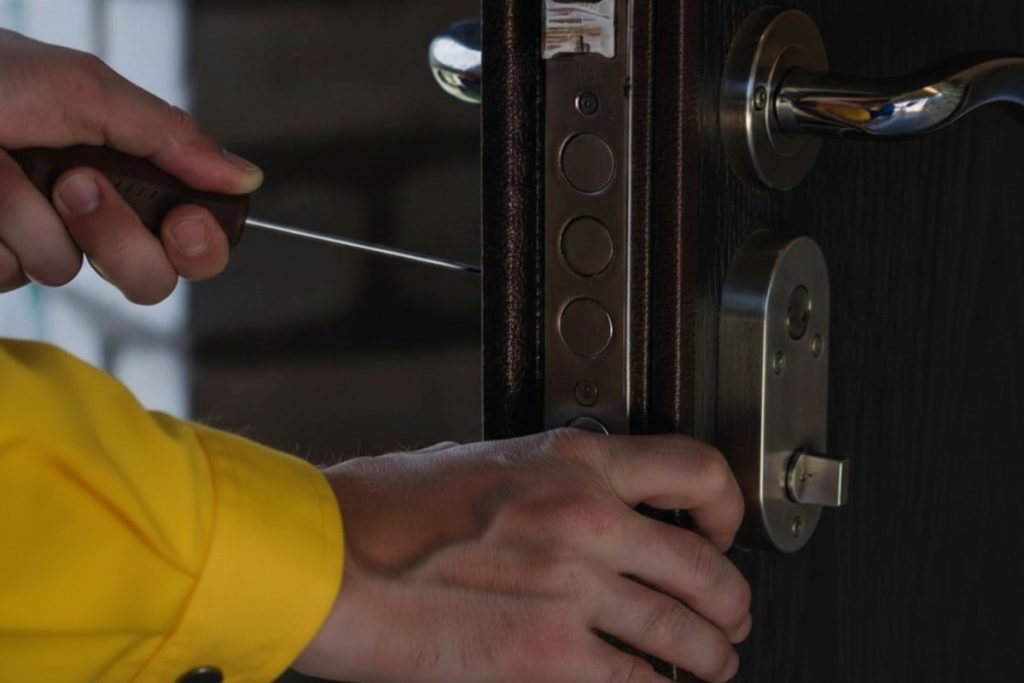
Even the best hardware underperforms when it is installed poorly. A deadbolt has to align cleanly with its strike so the bolt throws its full length, and the strike has to be mortised and anchored correctly into the framing. A door that requires a shoulder to close, or a bolt that only extends partway, leaves a gap an intruder can exploit. This is where professional installation earns its keep, because a technician sets the alignment, depth, and anchoring so every piece does its job.
A locksmith can also look at the whole entry as a system rather than a single part, catching the weak latch strike you forgot about or the hollow door behind a shiny new lock. If you want a technician to handle the hardware selection and fitting, our deadbolt and knob installation service covers the full job, and you can browse the rest of our residential offerings to bundle related work into one visit.
Frequently Asked Questions
What is the single most important door security upgrade?
What deadbolt grade should I look for?
Are smart locks as secure as traditional deadbolts?
What is lock bumping and should I worry about it?
Does Tucson’s heat really affect my locks?
Can one visit cover several upgrades at once?
Making the Right Call
A secure door is not about one heroic lock. It is the deadbolt, the strike, the screws, the cylinder, and the door itself all doing their part. Start with the reinforced strike and a solid deadbolt, since that pairing stops the most common attack for the least money, then add high-security cylinders, a stronger door, or a smart lock as your budget allows. Choose hardware rated for the Tucson climate so your upgrade still performs after a few summers, and have it installed correctly so every piece pulls its weight.
Discount Locksmith of Tucson is a licensed, insured mobile shop, and our background-checked technicians install and service residential security hardware on-site, every day from 6:00 AM to 9:30 PM. We work throughout Tucson and nearby communities including Oro Valley, Marana, Sahuarita, and the Catalina Foothills. You can learn more about our local team, see the complete list of services we handle, or read about the door security work we do throughout Tucson.
Ready to harden your entry doors? Call (520) 994-8773 for upfront pricing on the right upgrades, reach out through our contact page to book a visit, or find Discount Locksmith of Tucson on the map. Start from the Discount Locksmith of Tucson home page to see everything we cover across the area.